
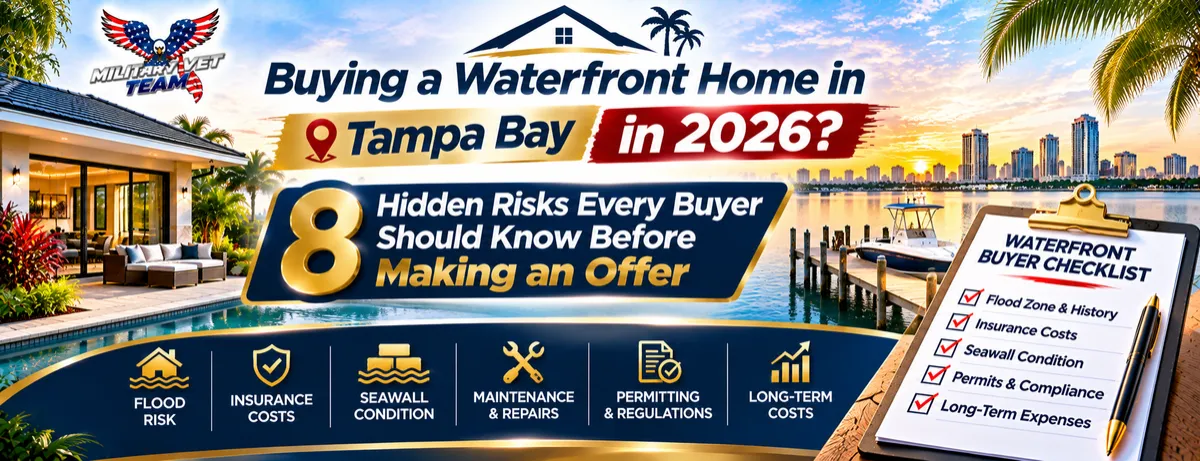
8 Hidden Risks Every Buyer Should Know Before Making an Offer
Imagine waking up every morning to breathtaking water views, gentle coastal breezes, and the peaceful atmosphere of Florida's Gulf Coast.
Your coffee tastes better on the patio. Weekends mean boating, fishing, or simply watching the sunset over the water.
For many homebuyers, this is the ultimate Florida lifestyle.
And communities such as Clearwater, St. Petersburg, Madeira Beach, Treasure Island, and other Tampa Bay waterfront neighborhoods offer opportunities to make that dream a reality.
But here's something every buyer needs to understand:
A waterfront home can be one of the most rewarding purchases you'll ever make—or one of the most expensive mistakes if you overlook what's beneath the surface.
Beyond the beautiful views and attractive listing photographs, waterfront properties come with unique considerations involving flood exposure, insurance, seawalls, maintenance, permitting, and long-term ownership costs.
As a Florida native, Realtor, and certified Military Relocation Professional serving Pinellas and Hillsborough Counties, I understand the importance of looking beyond a property's appearance.
My experience with real estate and vacation rental properties has reinforced one important principle: the smartest investment is the one you fully understand before purchasing.
If you're considering a waterfront home in Tampa Bay in 2026, here are eight critical factors to investigate before making an offer.
1. Flood Risk: A Beautiful View Doesn't Tell the Whole Story
One of the first things buyers notice about waterfront properties is their location.
A home overlooking Tampa Bay, the Intracoastal Waterway, or the Gulf can offer incredible scenery and convenient access to outdoor activities.
However, proximity to water can also introduce flood-related risks.
Flood exposure varies depending on elevation, topography, drainage, and the property's specific location.
Two houses on the same street may have different risk characteristics.
Understand the Flood Zone Before Buying
The Federal Emergency Management Agency (FEMA) publishes flood hazard maps that identify areas with different levels of mapped flood risk.
Properties in certain high-risk flood zones may require flood insurance when purchased with federally regulated or federally backed mortgage financing.
But here's an important distinction:
Being outside a high-risk flood zone doesn't mean a property is flood-proof.
Heavy rainfall, storm surge, and drainage problems can affect properties beyond designated high-risk areas.
Before purchasing, review the property's flood zone, available elevation information, and known flood history.
You should also investigate whether the property has experienced previous flooding and whether any related repairs were completed.
Florida's Updated Flood Disclosure Requirements
Florida law requires sellers of residential real estate to provide a flood disclosure at or before execution of the sales contract.
The disclosure includes the seller's knowledge of flood damage during ownership, flood-related insurance claims, and assistance received for flood damage.
The requirements were expanded effective October 1, 2025.
This makes reviewing flood history an important part of the buying process in 2026.
For the current requirements, see Florida Statutes Section 689.302.
A waterfront property should be evaluated for both its lifestyle benefits and its potential exposure to future events.
2. Flood Insurance Can Significantly Affect Your Monthly Budget
Many buyers begin their search by calculating how much mortgage payment they can afford.
However, waterfront ownership involves expenses that may not be immediately obvious.
Flood insurance is one of the most important.
Standard homeowners insurance generally doesn't cover damage caused by flooding.
Depending on the property and financing arrangement, separate flood coverage may be required or strongly worth considering.
Why Insurance Costs Vary
Flood insurance premiums can depend on multiple factors, including property characteristics, location, flood risk, coverage selections, and applicable policy terms.
A property with a lower purchase price may still carry higher insurance expenses than another home.
For example, imagine comparing two waterfront homes.
The first property costs $475,000 but requires more expensive insurance coverage.
The second costs $500,000 but has different elevation characteristics and potentially lower estimated insurance expenses.
The more expensive home could have a lower total ownership cost under certain circumstances.
That's why buyers should obtain property-specific insurance estimates before completing their purchase.
Don't Wait Until Closing
Insurance availability and pricing should be investigated early.
If you're financing the property, your lender may have coverage requirements that affect the transaction.
Buyers should also understand applicable deductibles, exclusions, coverage limits, and waiting periods.
A property that appears affordable based on the mortgage payment alone may become financially uncomfortable once all insurance expenses are included.
The goal is to know your real monthly housing cost before committing.
3. Seawalls Can Become a Major Financial Responsibility
For certain waterfront properties, seawalls help protect land from erosion and water-related forces.
They may also be an essential part of the property's waterfront infrastructure.
However, seawalls can deteriorate over time.
And repairing or replacing them can involve significant expense.
What Buyers Should Investigate
When considering a property with a seawall, ask about its age, construction type, maintenance history, and previous repairs.
Look for available documentation from contractors or engineers.
Potential warning signs may include visible cracking, leaning, displaced sections, erosion behind the wall, or areas where soil appears to be washing away.
These observations don't automatically establish structural failure.
However, they may indicate a need for professional evaluation.
Why a Standard Home Inspection May Not Be Enough
A general home inspector may identify visible concerns, but a seawall often requires specialized expertise.
Depending on the property, buyers may benefit from an assessment by a qualified marine contractor or engineer.
Waterfront construction and repairs may also involve environmental requirements and permits from applicable authorities.
Before assuming a seawall can be repaired or modified easily, investigate the approval process and potential costs.
A waterfront home with an attractive asking price may become substantially more expensive if major marine infrastructure work is required.
4. Boat Docks and Lifts Aren't Automatically Ready for Use
For buyers who love boating, a private dock can be one of the most appealing features of a waterfront home.
Imagine stepping outside, boarding your boat, and heading out for an afternoon on the water.
It's an incredible lifestyle benefit.
But a dock or boat lift shouldn't be evaluated based solely on appearance.
Ask About the Dock's Condition and Permits
Before purchasing, investigate whether the dock and lift were properly permitted and whether modifications were completed with necessary approvals.
Review available maintenance records and inspect the condition of structural components.
A boat lift may look functional but still require servicing, electrical repairs, or replacement components.
For larger vessels, verify the lift's rated capacity and suitability with a qualified professional.
Understand Water Access
Not every waterfront property provides the same boating opportunities.
Some homes have direct access to navigable waterways.
Others may involve bridges, shallow channels, tidal limitations, or other restrictions.
A property marketed as having boating access may not accommodate every vessel.
Before buying, confirm the water depth, access route, and any restrictions relevant to your intended use.
If boating is a major reason for your purchase, these details should be investigated before the inspection period expires.
5. Salt Air Can Increase Maintenance Requirements
Living near the coast offers beautiful views and refreshing breezes.
However, coastal conditions can also increase maintenance demands.
Salt exposure and humidity may contribute to corrosion and deterioration of certain materials.
Exterior metal fixtures, railings, equipment, fasteners, and other components may require additional attention.
Look Beyond the Interior Finishes
During a showing, buyers often focus on kitchens, bathrooms, flooring, and furniture arrangements.
But waterfront homes deserve a closer examination of exterior components.
Consider the condition of windows, doors, balconies, outdoor equipment, and exposed metal fixtures.
Ask about the property's maintenance history and any recurring corrosion-related repairs.
Air-conditioning equipment located in coastal environments may also require careful maintenance.
The actual impact depends on exposure, materials, installation quality, and upkeep.
Budget for Preventive Maintenance
Waterfront ownership doesn't automatically mean constant repairs.
Well-maintained properties can provide years of enjoyment.
However, buyers should anticipate that certain components may require more frequent inspection, cleaning, or replacement than comparable equipment in less exposed environments.
Preventive maintenance can help identify developing concerns before they become larger problems.
A realistic ownership budget should account for these responsibilities.
6. Waterfront Condominiums Have Their Own Financial Considerations
Not every waterfront buyer wants a detached house.
Condominiums in St. Petersburg, Clearwater Beach, and surrounding coastal communities may appeal to buyers seeking scenic views with shared maintenance services.
Depending on the building, owners may enjoy amenities such as swimming pools, fitness centers, parking facilities, and managed common areas.
However, condominium ownership introduces additional financial obligations.
Understand Association Fees and Special Assessments
Condominium associations collect assessments to fund operating expenses, maintenance, insurance, and other obligations.
Some associations may also impose special assessments to address major projects or unexpected expenses.
For waterfront buildings, exterior maintenance, structural components, and weather exposure can be particularly important considerations.
Buyers should review available association budgets, reserve information, meeting minutes, insurance details, and notices of pending assessments.
Investigate Building Inspections
Certain Florida condominium buildings are subject to milestone inspection and structural integrity reserve study requirements.
These requirements can influence maintenance planning and association finances.
A condominium with an attractive purchase price may have substantial monthly fees or anticipated repair obligations.
Before purchasing, understand what the association maintains, what individual owners are responsible for, and whether significant projects are planned.
The right condominium can offer an excellent lifestyle, but buyers need to evaluate the entire building—not just the unit.
7. Vacation Rental Potential Should Never Be Assumed
Tampa Bay's coastal communities attract visitors interested in beaches, boating, restaurants, and waterfront recreation.
For some buyers, this creates interest in purchasing a property that could potentially generate rental income.
However, vacation rental ownership involves more than selecting an attractive location.
Verify Rental Restrictions Before Buying
Rules governing short-term rentals vary by municipality, property type, zoning, and association requirements.
Some communities restrict rental frequency or minimum lease duration.
Others may have registration, licensing, tax, or operational requirements.
Condominium associations and homeowners associations may impose additional restrictions.
Before purchasing a property with rental income in mind, verify what is legally permitted for that specific address.
Don't assume that neighboring properties operate under identical rules.
Calculate Realistic Operating Expenses
Rental revenue is only one part of the financial equation.
Owners may need to account for property management, cleaning, utilities, insurance, maintenance, vacancy, furnishings, and applicable taxes.
A property that produces attractive gross rental revenue may generate substantially less net income after expenses.
My background in vacation rental property management has given me an appreciation for the operational side of real estate ownership.
For buyers considering a second home or investment property, understanding those responsibilities is essential.
A successful purchase should make sense financially even when rental projections are conservative.
8. Think About Resale Value Before You Fall in Love With the View
Waterfront homes often offer distinctive features that can make them highly desirable.
However, buyers should consider future resale opportunities as well as current enjoyment.
A property's location, condition, flood exposure, insurance expenses, and waterfront infrastructure can influence how future buyers evaluate it.
Ask the Questions Your Future Buyer Will Ask
Before purchasing, consider how another buyer might view the property several years from now.
Will the roof or seawall require major attention?
Are the insurance expenses manageable?
Is the property accessible to the type of buyer likely to consider it?
Are there restrictions affecting renovations, rentals, or boating?
Does the home offer features that distinguish it from competing properties?
These questions don't guarantee future appreciation or resale performance.
They help you make a more informed decision.
Avoid Paying for Features You Won't Use
A private dock, boat lift, or expansive waterfront lot may be valuable to someone who regularly enjoys boating.
But if you don't plan to use those features, the maintenance responsibilities may outweigh their personal value.
Similarly, a waterfront condominium may provide the views you want without the same responsibilities as a detached home with a seawall and dock.
The best property is the one that fits both your lifestyle and your financial goals.
Frequently Asked Questions About Buying Waterfront Property in Tampa Bay
Is buying a waterfront home in Tampa Bay a good investment in 2026?
A waterfront property can offer strong lifestyle benefits and potential long-term value, but investment outcomes depend on purchase price, property condition, insurance costs, maintenance, and future market conditions. Buyers should evaluate each property individually rather than assume all waterfront homes will appreciate.
Do I need flood insurance if my waterfront home isn't in a high-risk flood zone?
Flood insurance may not be required by a lender in every situation, but properties outside high-risk flood zones can still experience flooding. Discuss your property's risk and coverage options with a qualified insurance professional.
What inspections should I get before buying a waterfront home?
A comprehensive home inspection is an important starting point. Depending on the property, additional evaluations may include roof, seawall, dock, boat lift, drainage, pest, HVAC, and other specialized inspections. Insurance-related four-point and wind mitigation inspections may also be useful.
The Right Waterfront Home Should Bring Peace of Mind, Not Financial Surprises
There's something special about waterfront living in Tampa Bay.
Whether you're watching the sunset from a Clearwater condominium, enjoying boating access in St. Petersburg, or relaxing at a coastal property near Madeira Beach, the lifestyle can be extraordinary.
But the most successful waterfront purchases begin with preparation.
Flood exposure, insurance, seawalls, docks, coastal maintenance, association obligations, and rental restrictions all deserve careful evaluation.
A beautiful view may inspire you to purchase a home.
Understanding the property is what helps you purchase it with confidence.
As a Florida native, certified Military Relocation Professional, and Realtor serving Pinellas and Hillsborough Counties, I believe buyers deserve more than a property tour.
They deserve practical guidance, informed questions, and a clear understanding of the responsibilities that come with ownership.
My experience in residential real estate and vacation rental property management helps me approach purchases with attention to both lifestyle and long-term financial considerations.
At the Military Veteran Team at LPT Realty, our mission is to help clients make confident decisions through service, integrity, and commitment.
Whether you're relocating to Tampa Bay, purchasing a second home, or searching for your dream waterfront property, the right strategy starts before you make an offer.
Ready to explore waterfront homes in Tampa Bay?
Let's find a property that delivers the Florida lifestyle you want while helping you understand the risks, responsibilities, and costs before closing.
Connect with Jason Patiño of the Military Veteran Team at LPT Realty at jason.mvtcollective.com to begin your waterfront home search.